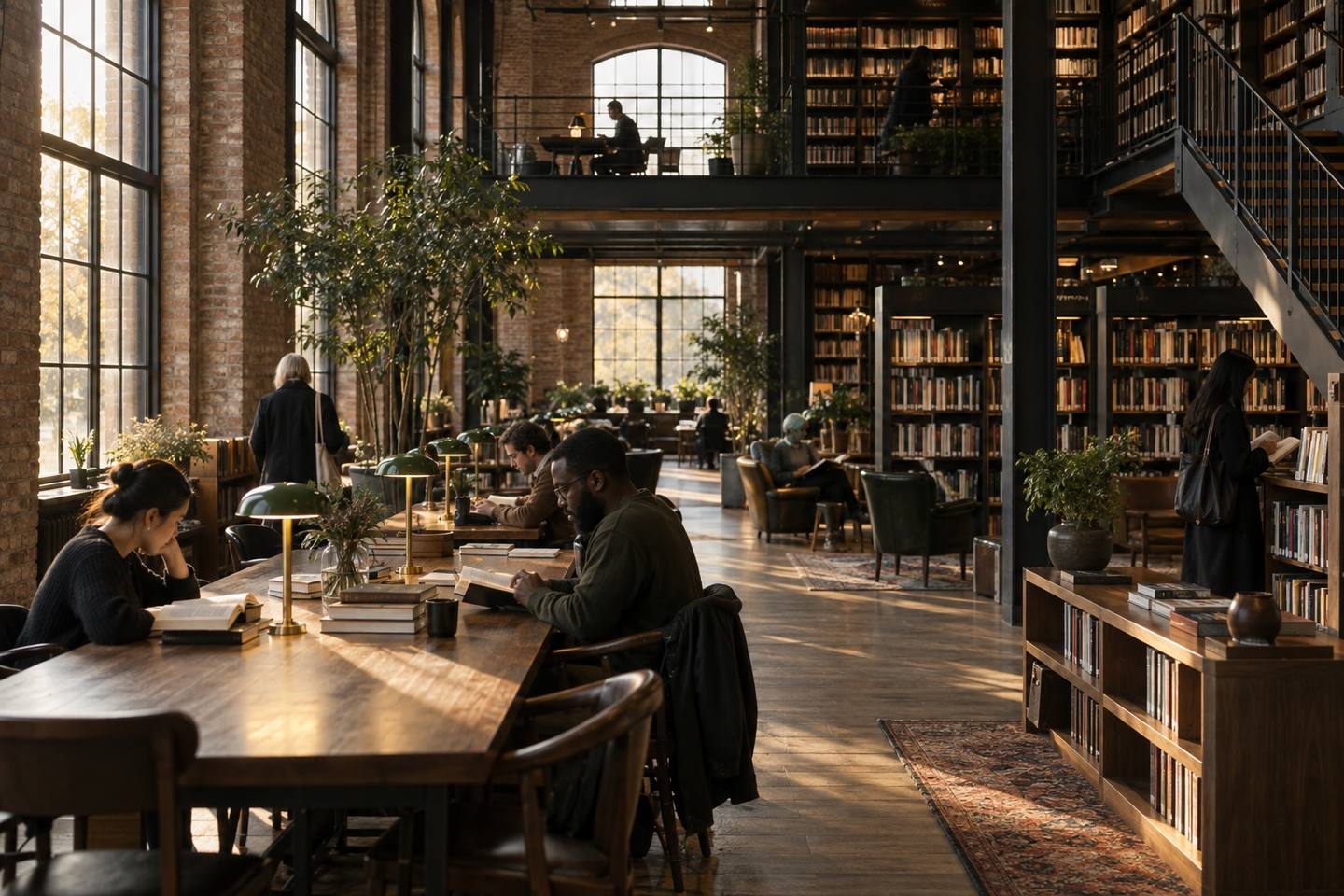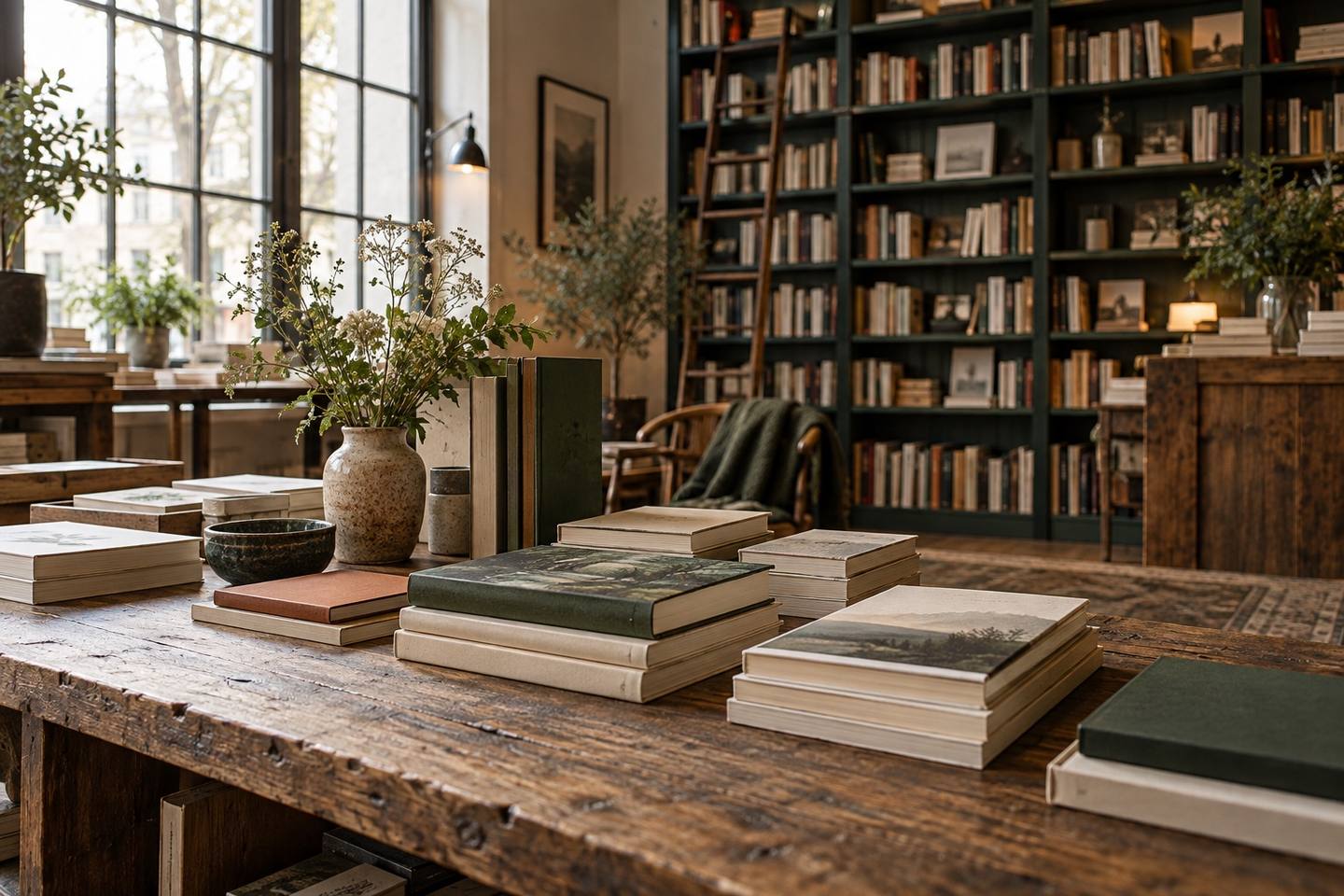
The best detail in this imagined bookshop is an unoccupied chair. It is not positioned as a photo opportunity, and there is no instruction about what you must buy before sitting down. It offers a simple proposition: browsing is an activity worth accommodating.
The shop is small enough that its choices remain legible. A table groups books around a question rather than a sales chart. The shelves are full without feeling like a warehouse. A handwritten recommendation would belong here, though this demonstration image wisely declines to invent one.
An arrangement of attention
A bookshop is a commercial space, but its best form does not feel like a conversion funnel. It needs to sell books, and it can be honest about that need. It can also recognise that a reader sometimes arrives with an appetite that has not yet become a title.
That is where the arrangement matters. Putting a collection of essays beside a novel can create a useful conversation. Leaving some space on a table gives the eye a place to rest. A display can invite a reader to consider an unfamiliar subject without claiming that every object is urgent.

What the room gets right
- A clear path through the shelves, with space to stop.
- A mixture of broad categories and small editorial surprises.
- Seating that makes browsing feel welcome rather than inefficient.
- Good light without the theatrical glare of a product display.
The reservation is that atmosphere can become a substitute for access. A lovely interior is not enough if a visitor cannot reach the shelves or discover a price. The most persuasive version of this shop would carry its care into these less photogenic details.
Still, the underlying idea is strong. The shop treats selection as a service and time as part of the experience. It leaves enough room for a reader to discover that they were looking for something different from the thing they thought they wanted.
Verdict: the most valuable thing on display is an invitation to pay attention.
Columnist demonstration · This is original fictional sample content, not a report of real events. Images are AI-generated illustrations.