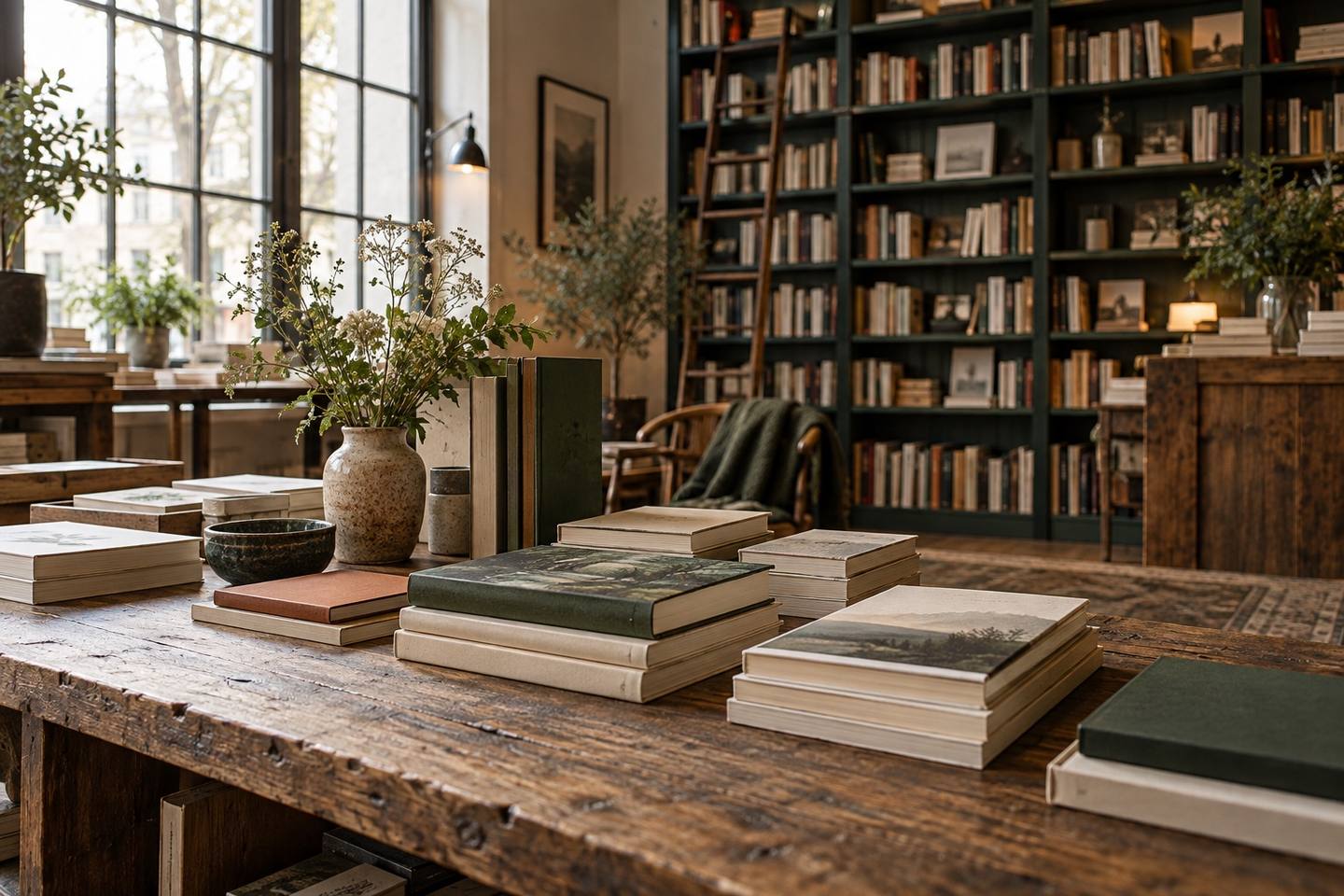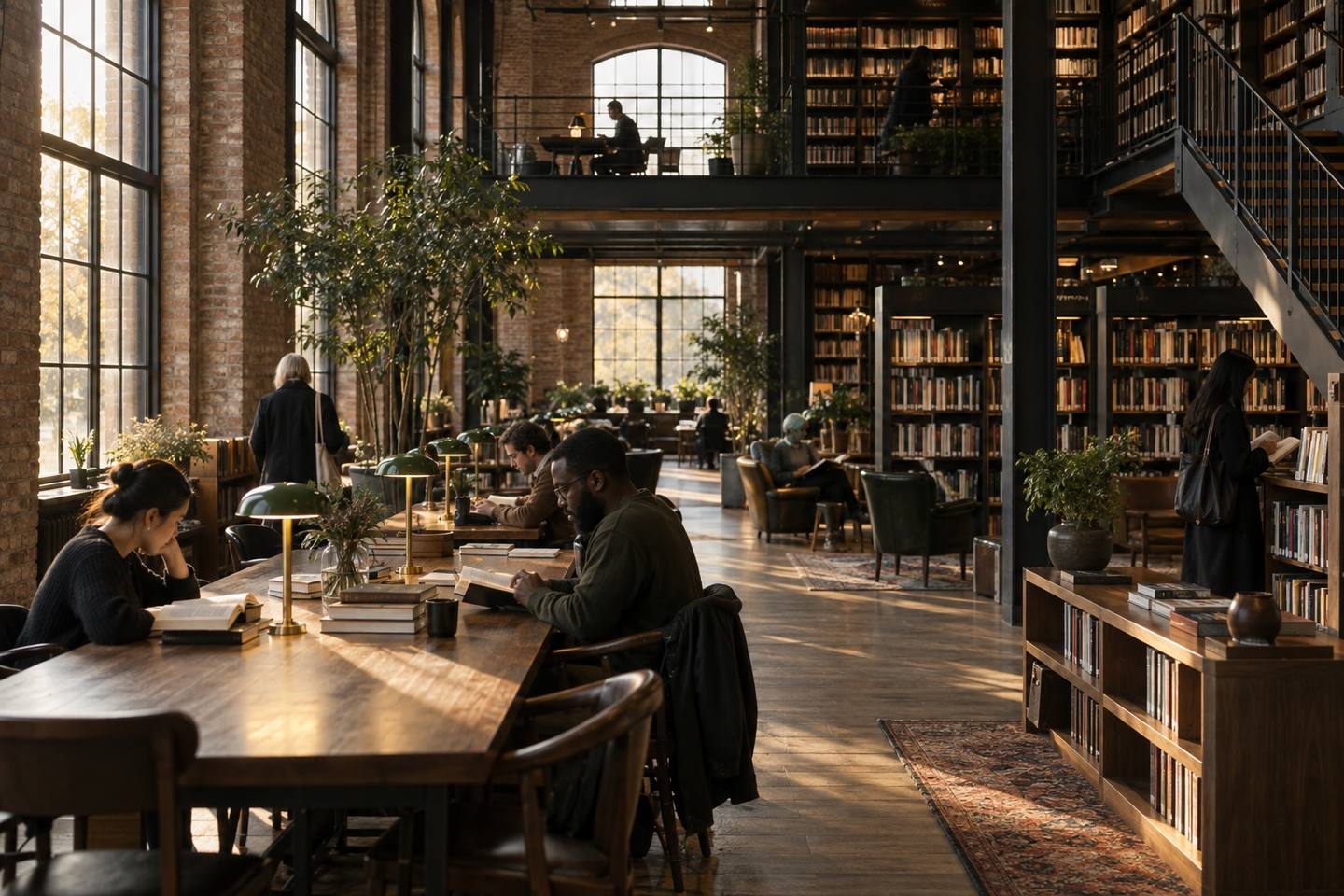
What makes a public room feel genuinely public? In this fictional interview, an imagined civic designer considers the difference between an attractive building and a place that people can use without continually explaining why they are there.
Where would you begin a new library project?
I would begin with the people who stay. Architectural drawings tend to describe movement beautifully: arrival, circulation, exit. But a library also needs to support somebody who is not going anywhere for the next hour. Where can that person sit? Can they hear themselves think? Can they look out of a window?
Is that primarily a question of furniture?
Furniture matters, but permission matters more. A room communicates permission through a hundred small decisions. A sign can be helpful or suspicious. A desk can offer assistance or feel like a checkpoint. The arrangement of a chair can suggest that you are welcome to pause or that you are expected to leave.
The building after opening day
What gets overlooked in the opening-day photograph?
The ordinary systems. Where does a wet coat go? Who notices that a door has become difficult to open? Can a member of staff see enough of the room to help without making every visitor feel watched? Beautiful surfaces do not answer those questions by themselves.
How do you avoid designing for an imaginary average visitor?
By paying attention to specific days. A parent arriving with children. A reader who needs a quiet corner. Somebody learning the language. Somebody who has no reliable connection at home. You cannot resolve every need in one chair, but you can offer a range of places without arranging them into a hierarchy of who deserves comfort.
A public room should not make people purchase their right to remain.
What would you keep deliberately simple?
The first five minutes. Finding the entrance, understanding where to ask a question, locating a toilet, seeing somewhere to sit. A good building does not need to announce how sophisticated it is at every opportunity. It can let people get on with their lives.
And what would you measure a year later?
I would ask which parts people have made their own and which parts they avoid. Then I would ask the staff what breaks, what causes confusion and what they have quietly adapted. The people who operate a building are often its most observant design critics.
Columnist demonstration · This is original fictional sample content, not a report of real events. Images are AI-generated illustrations.